Quiet Fireworks for Neighborhoods With Noise Rules
Table of Contents
What Counts as Quiet Fireworks?
Noise Ordinance Fireworks Laws: What You Need to Know
How to Look Up Your Local Rules
What to Do If the Rules Are Unclear
Decibel Levels: How Loud Are Common Fireworks?
Low Noise Fireworks for Sale: What to Look For
Fountains, Sparklers, and Ground Effects
How to Host a Quiet Fireworks Show
Step-by-Step Setup for a Backyard Display
Talking to Neighbors and Handling Complaints
Pet-Friendly Firework Alternatives
Conclusion
Frequently Asked Questions
Last Updated: September 24, 2026
What Counts as Quiet Fireworks?
Quiet fireworks are consumer fireworks designed to produce low sound levels, typically through reduced explosive charge and a focus on visual effects rather than loud reports. More shoppers are asking for these products every year, especially in neighborhoods where noise rules are strict.
The term covers many items. Fountains, ground spinners, and low-report cakes all fall into this group. What they share is a design choice: less bang, more color.
A common mistake is assuming "quiet" means silent. It doesn't. These products still make noise, just at lower levels than a standard aerial shell or firecracker.
Keep reading to learn how local rules work, what decibel levels to expect, and how to plan a display your neighbors won't dread.
Noise Ordinance Fireworks Laws: What You Need to Know
Noise ordinance fireworks laws vary by state, county, and sometimes by neighborhood. There is no single national rule that covers every backyard display. That is the frustrating part. The useful part is that almost every jurisdiction publishes its rules somewhere, and once you know where to look, you can find the answer for your exact address in about 15 minutes.
Most local rules cover four things: permitted hours, permitted product types, distance requirements, and total bans in certain zones. Common restrictions include:
Time windows, often evening hours on specific holidays
Distance requirements from homes, schools, and hospitals
Total bans in high fire risk zones
Permit requirements for larger displays
Seasonal bans tied to drought conditions
The rules that apply to you depend on where you light the product, not where you bought it. A legal firework in one town can be illegal two miles away.
How to Look Up Your Local Rules
Start with your city or county website. Search for the name of your municipality plus "fireworks ordinance" or "noise ordinance." Most municipalities post their full code online, often through a portal like Municode or American Legal Publishing. Search the code for the word "fireworks" and read the section that applies to your zoning district.
Then check your state fire marshal's office. Many publish a yearly guide listing which consumer fireworks are legal and where. These guides are usually written in plain language and are the fastest way to see whether your state permits the product you are considering.
A few practical steps:
Find your exact jurisdiction. If you live in an unincorporated area, your county rules apply, not the nearest city's. If you are in a homeowners association, HOA rules stack on top of city and county rules.
Search the code for "fireworks," "pyrotechnics," and "noise" separately. Some jurisdictions file fireworks rules under fire prevention rather than noise.
Note the permitted hours. Many places allow use only on specific dates, and only within a window like 9 a.m. to 10 p.m. or 9 a.m. to midnight.
Check for distance language. Some codes require a set number of feet from an occupied structure, a fuel source, or a roadway.
Check for a burn ban or fire restriction zone overlay. These can override everything else during dry periods.
Call your local fire department's non-emergency line to confirm what you found. They would rather answer a question in June than respond to a complaint in July.
What to Do If the Rules Are Unclear
Sometimes the code is silent, outdated, or written before consumer fountains and low-report cakes were common. In that case, the safest move is to ask. A short call to the non-emergency line or a quick email to the city clerk usually gets a clear answer. Keep a note of who you spoke with and when.
If your area allows fireworks but your HOA restricts them, the HOA rule usually governs your use on HOA property. Read your covenants or ask your board before you buy.
Pro Tip Screenshot the ordinance page and save the date. Rules change, and having the version you relied on is useful if a neighbor or an officer questions your display later.
Firework compliance starts with knowing the rules before you buy, not after. Fifteen minutes of research is cheaper than a citation, and it is the difference between a display your neighbors enjoy and one they report. Shifting the focus toward firework alternatives for events ensures that celebrations remain festive without violating local noise ordinances or disturbing the peace of the surrounding community.
Decibel Levels: How Loud Are Common Fireworks?
Most guides say "quieter" and stop there. That is not useful when you are standing in a driveway trying to decide between two cakes. What actually helps is knowing roughly where each product type lands on the decibel scale and how that compares to sounds your neighbors already tolerate.
A few ground rules before the numbers. Decibels are measured on a logarithmic scale, so a 10 dB increase is perceived as roughly twice as loud. Sound pressure also drops with distance, in open air, moving from 10 feet to 40 feet away can cut the level at your ear by roughly 12 dB, which is a big perceptual drop.
Source | Approximate Level | What It Sounds Like |
Whisper | 30 dB | Library quiet |
Normal conversation | 60 dB | Talking across a table |
Busy street traffic | 70-80 dB | Standing near a road |
Vacuum cleaner | 70-75 dB | Living room appliance |
Garbage disposal | 80-85 dB | Kitchen sink |
Lawn mower | 90 dB | Backyard, running |
Motorcycle | 95-100 dB | Passing on the street |
Standard firecracker | 140-150 dB at close range | Gunshot-adjacent |
Aerial shell break | 130-150 dB at close range | Thunder crack |
Multi-shot cake | 110-130 dB depending on size | Rock concert front row |
Fountain | 70-90 dB | Vacuum to lawn mower |
Sparkler | 50-70 dB | Conversation to traffic |
Ground spinner | 60-80 dB | Conversation to busy street |
Key Takeaway If you remember one number, remember this: a fountain at 40 feet is roughly as loud as a vacuum cleaner in the next room. That is the target range for a neighborhood-friendly show.
Low Noise Fireworks for Sale: What to Look For
When shopping for low noise fireworks for sale, focus on product labels and effect descriptions, not just the name. Many items marketed as "quiet" still carry a noticeable report.
Look for these signals:
Product descriptions that mention "low noise" or "quiet"
Fountains and ground effects over aerial repeaters
Cakes labeled for close-proximity use
Items sold in variety packs that mix visual and low-sound effects
Fountains, Sparklers, and Ground Effects
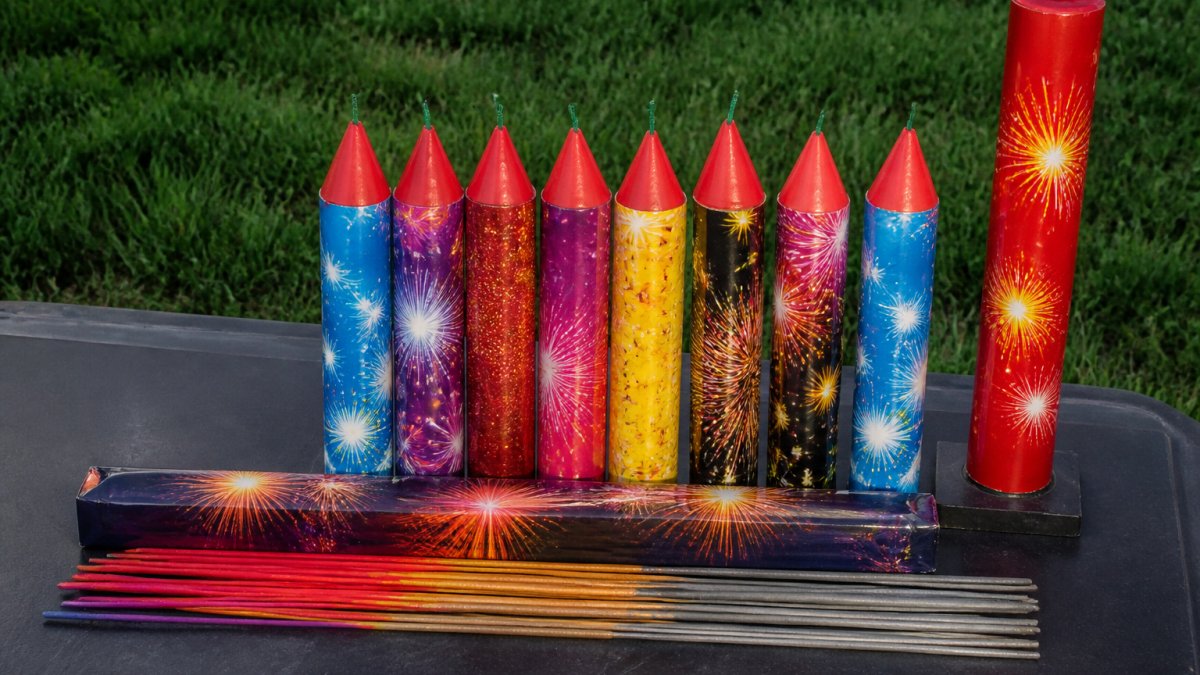
Fountains are the workhorse of any quiet show. They spray sparks upward in cones or plumes, and they run for anywhere from a few seconds to over a minute.
How to Host a Quiet Fireworks Show
Hosting a quiet fireworks show comes down to three things: product choice, spacing, and timing. Get those right, and you can put on a display that feels bigger than it sounds.

Step-by-Step Setup for a Backyard Display
Check your local permitted hours before you light anything
Clear a 15-foot radius around each firing position
Set fountains and ground effects on level pavement or bare dirt
Keep a bucket of water and a hose nearby
Light one item at a time and step back
Space items so effects don't overlap into a wall of noise
Let each item cool completely before handling
Watch Out Never relight a firework that fizzled out (CPSC Shares Fireworks Safety Tips as America Turns 250). Wait 20 minutes, then soak it in water. Relighting is one of the most common causes of backyard injuries.
Talking to Neighbors and Handling Complaints
A heads-up goes further than an apology. Most neighborhood disturbance complaints stem from surprise, not volume.
Pro Tip Text your immediate neighbors the day before, not the day of. A same-day notice reads as an announcement. A day-ahead notice reads as a courtesy.
Pet-Friendly Firework Alternatives
Pets feel fireworks more than people do. Their hearing is more sensitive, and the unpredictability is what stresses them most.
If you want a display that won't send the dog under the bed, try these:
Handheld sparklers and quiet fountains
Glow sticks and LED light shows
Projected light displays on a garage or fence
Community drone shows, where available
Silent disco style backyard parties with no pyrotechnics at all
Conclusion
Quiet fireworks for neighborhoods with noise restrictions solve a real problem: how to celebrate without becoming the block's least popular house.
Frequently Asked Questions
Are there fireworks that aren't loud?
Yes. Fountains, sparklers, ground spinners, and low-noise cakes produce visual effects with minimal sound. These quiet fireworks rely on chemical compositions that burn without the sharp crack or boom of traditional aerial shells. Look for products labeled as low-noise or silent, and check the packaging for decibel information. Many online retailers, including Best Fireworks Stores, categorize items so you can filter by noise level before ordering.
How do I check local noise ordinance fireworks laws before setting off fireworks?
Start by visiting your city or county website and searching for the noise ordinance or fireworks section. Most municipalities list permitted hours, allowed dates, and decibel limits for residential zones. You can also call your local police non-emergency line or fire department for clarification. Some states require permits for any aerial display, even on private property. Always confirm your address is eligible for delivery and use before purchasing.
Can you hear fireworks from 20 miles away?
Large aerial shells can be heard from several miles away under quiet conditions, but 20 miles is unlikely for typical consumer fireworks. Sound pressure drops significantly with distance. A 120-decibel launch at 100 feet may fade to a faint thump at one mile. Weather, terrain, and background noise all affect how far sound travels. Low-noise fireworks produce far less sound pressure, so they are rarely audible beyond a few hundred feet.
What are the best alternatives to loud artillery shells for small yards?
For small yards, try multi-shot cakes with low-noise effects, fountains, and ground-based spinners. These quiet fireworks deliver color and shape without the boom of artillery shells. You can also use LED or laser projectors for a completely silent show. If you want some height, look for low-noise aerial cakes that use whistle or crackle effects instead of loud reports. Always follow local noise ordinance fireworks laws and check product labels.
Get Started Today

Comments