Choosing Reliable Fireworks for Wedding Shows: 2026 Guide
Table of Contents
Why Reliable Fireworks Matter for Wedding Shows
The Difference Between a Memorable Finale and a Fizzled Ending
Best Fireworks for Weddings: Matching Effects to Your Celebration
Cakes, Candles, and Shells: What Each Effect Delivers
Sparklers, Cold Sparklers, and Low-Smoke Alternatives
How Long Should a Wedding Fireworks Display Last?
Venue Rules, Permits, and Contingency Planning
A Site Feasibility Check You Can Run in Ten Minutes
Wind, Drought, and Weather Contingency
Who Decides to Cancel
Wedding Fireworks Safety Tips for Guests and Property
Your Wedding Fireworks Planning Checklist
How to Vet a Fireworks Supplier and Compare Quotes
The Vetting Checklist
Comparing Quotes Apples-to-Apples
Questions That Reveal a Weak Supplier
What a Good Quote Looks Like
Conclusion: Book Early and Confirm Every Detail
Frequently Asked Questions
Last Updated: October 13, 2026
Why Reliable Fireworks Matter for Wedding Shows
Choosing reliable fireworks for wedding shows is the difference between a finale guests remember for years and a dud that fizzles in front of everyone you love. Reliability starts with the supplier, not the label.
A wedding display is a one-shot performance. There is no retry.
The Difference Between a Memorable Finale and a Fizzled Ending
A fizzled ending usually traces back to three avoidable things: damp or old stock, an untested cake, or a show timed to the wrong moment.
The U.S. Consumer Product Safety Commission fireworks safety guidance notes that consumer fireworks are safest when bought from licensed, reputable sellers and stored properly before use.
Reliability also means consistency: every cake in a case of multi-shot cakes should perform the same way, while cheap stock varies wildly.
Key Takeaway Reliability is a supply-chain question before it is a product question. Buy from a seller who controls storage and shipping, not a pop-up tent that opened last week.
Best Fireworks for Weddings: Matching Effects to Your Celebration
The best fireworks for weddings match the mood of your reception, not just the biggest boom. Start with the feeling you want, then pick the effect that delivers it.

Cakes, Candles, and Shells: What Each Effect Delivers
Each effect type does a different job:
Effect Type | What It Does | Best Moment | Notes |
Multi-shot cakes | Rapid repeating bursts from one fuse | Grand finale | Easiest to time |
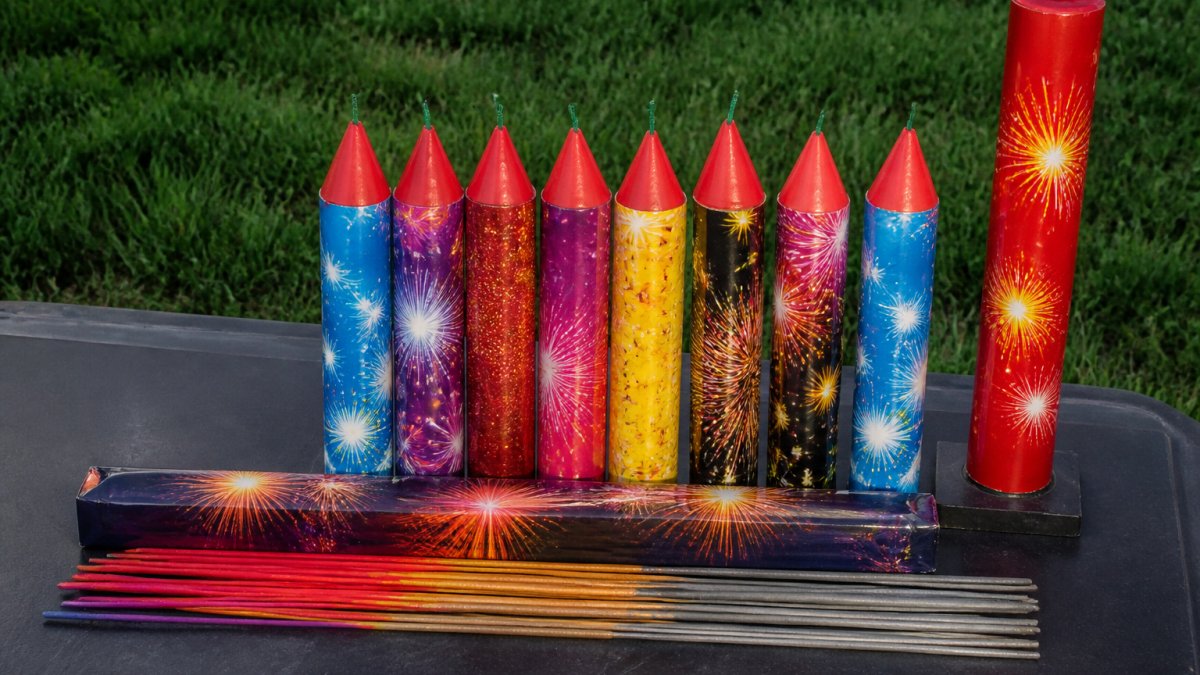
Candles | Steady fountain of sparks and color | First dance, cake cutting | Low noise |
Artillery shells | High single breaks with a loud report | Peak of the show | Needs open space |
Bottle rockets | Fast, erratic flights | Casual backyard events | Less predictable |
Crackers | Sharp noise and flash | Energy spikes | Loud, check comfort |
Cakes are the workhorse of a wedding show: one fuse, many shots, easy timing. Candles suit quieter moments without drowning out conversation. Shells deliver the big visual punch, but need room overhead and a clear fall zone.
Sparklers, Cold Sparklers, and Low-Smoke Alternatives
Not every couple wants a full aerial show. Sparklers give guests something to hold and photograph for the send-off. Cold sparklers are a popular indoor option because they throw sparks without the heat and smoke of traditional units, but confirm the venue allows them first.
Other low-impact choices include:
Laser light shows
Projection mapping on the venue
Chinese lanterns where local rules allow
Each cuts smoke, noise, and fire risk, and works when the venue bans open flame.
How Long Should a Wedding Fireworks Display Last?
A wedding fireworks display should run two to five minutes for most receptions, long enough to feel like a real event, short enough to hold attention. A tight two-minute show beats a ten-minute one that drags.
Timing matters as much as length. Most couples fire the display right after the last dance or during the send-off; some venues require a set hour for noise reasons.
Plan the length around three things:
Your venue's noise curfew
Your photographer's coverage window
Your guests' comfort, especially older family members
Pro Tip Ask your supplier to quote for a two-minute and a five-minute show.
Venue Rules, Permits, and Contingency Planning
Venue rules decide what is possible before you pick a single effect. Many outdoor venues allow consumer displays with advance notice; others ban them outright. Indoor venues almost always restrict open flame.
Permits are usually handled at the local level. Requirements vary by city, county, and state, so check with your local fire department early. The National Fire Protection Association fireworks code information outlines the standards many local authorities reference when writing their rules.
A Site Feasibility Check You Can Run in Ten Minutes
Most couples ask "does the venue allow fireworks?" and stop there. The better question is whether the site can host the display you want. Walk the property and score five items:
Check | What to Measure | Why It Decides the Show |
Overhead clearance | Distance from the firing spot to the nearest tree canopy, roofline, or power line | Aerial effects need open sky; low branches catch embers and debris |
Fall zone | Ground area downwind of the firing spot, clear of guests, tents, and parked cars | Spent casings and sparks land somewhere; that somewhere must be empty |
Surface | Flat, paved, gravel, or dry grass | Dry grass and mulch are the highest-risk surfaces in summer |
Wind exposure | Prevailing wind direction at the venue's typical event hour | Smoke and debris travel with the wind, not against it |
Distance to structures | Nearest building, fence, or neighboring property line | Local rules set minimum distances; your venue may set stricter ones |
If any row fails, you have three options: move the firing spot, downsize to a lower-trajectory effect, or switch to a ground-level alternative. Decide before you sign a supplier contract, not the week of the wedding.
Wind, Drought, and Weather Contingency
Wind and dry conditions are the most common last-minute shutdown triggers. A practical contingency plan addresses both:
Wind. Pick a wind speed above which you will switch to a low-trajectory or ground-level effect. Your supplier and your local fire authority can tell you the threshold they use; many jurisdictions publish a cutoff in their permit conditions.
Drought. During burn bans or red-flag conditions, open-flame effects are often prohibited entirely. Have a no-flame backup ready: cold sparklers, laser, or projection.
Rain. Water and consumer fireworks do not mix. A rain date or an indoor alternative is not optional if your date falls in a wet season.
Who Decides to Cancel
Name one person before the wedding, someone with authority to make the call without hunting down the couple during the reception, such as the venue's event manager, your day-of coordinator, or the designated ignition person. Write the rule down: "If wind exceeds the permit threshold at T-minus 30 minutes, we switch to the backup effect." A rule beats a debate every time.
Watch Out Skipping the venue conversation is the most common wedding fireworks mistake. Couples book a display, then learn the venue bans it. You lose the deposit and the moment.
Pro Tip Ask your venue contact for the name of the last couple who fired a display there. That person has already solved the site's specific problems and can tell you what actually worked.
Wedding Fireworks Safety Tips for Guests and Property
Wedding fireworks safety tips start with distance and end with cleanup. Set a clear safety perimeter, keep guests behind it, and assign one designated, sober adult to handle ignition, not a guest who has had a few drinks.
Key safety steps:
Read every product label before the event
Set up on flat, clear ground away from buildings and trees
Keep a water source and fire extinguisher nearby
Give guests with pets, small children, or noise sensitivity a heads-up and a spot farther back. Smoke matters too: a long show in still air can leave a haze over the reception, so shorter shows and low-smoke alternatives help.
Your Wedding Fireworks Planning Checklist
A wedding fireworks planning checklist keeps details from slipping. Work through it in order, starting months out.
Confirm your venue allows fireworks and what type
Check local permit requirements with the fire department
Set your budget and decide show length
The earlier you start, the more options you keep. Popular dates sell out, and good suppliers book fast.
How to Vet a Fireworks Supplier and Compare Quotes
Vetting a fireworks supplier comes down to four questions: Are they licensed? Is stock consistent? How do they ship? What happens if something fails? Ask every supplier the same questions so quotes line up.
The Vetting Checklist
Work through this list with every supplier. One who answers all eight clearly can be trusted with a one-shot event.
Licensing. Ask for their license or permit number and the issuing authority. Verify it with that authority directly. Do not accept a screenshot.
Insurance. Ask for a certificate of insurance and confirm the coverage limits. If your venue requires additional insured status, ask the supplier to add it before the event.
References. Ask for two or three recent customers who hosted a similar event. Call them. Ask what went wrong, not just what went right.
Comparing Quotes Apples-to-Apples
Quotes rarely line up because suppliers bundle different things. Normalize every quote by breaking it into the same line items:
Line Item | What to Confirm | Why It Matters |
Product | Effect types, quantities, and case guarantees | Two quotes for "a show" can mean very different product |
Setup and teardown | Who does it, when, and whether it is included | A low product price with unbundled labor is not a low quote |
Firing crew | Number of people, training, and sobriety policy | Crew quality drives show reliability |
Permits | Who files, who pays, and who holds the permit | Permit responsibility is a common hidden gap |
Travel | Distance from supplier to venue and any surcharge | Travel fees can swing a quote significantly |
Cleanup | Who removes debris and spent units | Cleanup is often assumed and rarely included |
Taxes and fees | Sales tax, fuel surcharges, and any late-booking fees | These are the line items that appear after you commit |
Contingency | Rain date policy, cancellation terms, and refund schedule | The clause you hope never to use is the one that matters most |
Put every quote into this grid before comparing totals. The lowest number is often the one with the most blanks.
Questions That Reveal a Weak Supplier
A few questions separate a prepared supplier from a hopeful one:
"What is your failure rate on the cakes you are quoting me?" A vague answer is a red flag.
"Who is the designated ignition person, and what is their training?" If the answer is "whoever is available," walk away.
"What is your rain policy in writing?" If they cannot produce it, they have not thought about it.
What a Good Quote Looks Like
A good quote is itemized, dated, and signed.
This is where Best Fireworks Stores stands apart. We offer 24/7 online ordering, nationwide delivery where allowed, and warehouse pickup. Our wholesale cases ship to your door, and our selection covers cakes, candles, shells, crackers, and bottle rockets.
Ask about our delivery guarantee and return policy before you order, a supplier who answers those questions clearly is one you can trust.
Key Takeaway Vetting is a paperwork exercise, not a vibe check. The supplier who sends the certificate, the contract, and the references without being pushed is the one who will still answer the phone the week of the wedding.
Conclusion: Book Early and Confirm Every Detail
A wedding display rewards planning. Couples who get the show they imagined confirmed venue rules, locked a supplier early, and built a backup plan.
If you want reliable stock, clear pricing, and delivery you can count on, Best Fireworks Stores is built for exactly that.
Get started with fireworks for sale and lock in your wedding show before your date fills up.
Frequently Asked Questions
How do you choose fireworks for a wedding?
Start by matching the display to your venue and guest count. A small backyard reception suits cakes and sparklers, while a larger outdoor venue can handle a fuller show. Confirm the venue allows consumer fireworks, check local permit rules, and ask the supplier for product demo videos so you know how each item performs. Book early, especially for summer dates, and keep a rain plan in place.
How long should a wedding fireworks display last?
Most wedding displays run between five and twelve minutes. A two-minute show works for a brief send-off, while a ten-minute display gives you room for a build and a strong finale. Longer is not always better: guests stay engaged when the pacing is tight, and a shorter, well-timed show often photographs better than a drawn-out one.
What should you ask a fireworks supplier before ordering?
Ask about product performance guarantees, delivery timelines, and what happens if an item is defective. Confirm whether they ship to your address and whether a signature is required. Request demo videos for any cake or shell you plan to buy. A reliable supplier answers these questions directly and puts the terms in writing before you pay.
Are fireworks suitable for every wedding venue?
No. Many venues ban fireworks because of fire risk, noise ordinances, or insurance rules. Indoor venues almost never allow them. Check your contract and ask the venue manager about restrictions before you order anything. If fireworks are not allowed, cold sparklers, laser light shows, and Chinese lanterns can deliver a similar visual moment without the same restrictions.
fireworks for sale

Comments