Bulk Fireworks for Community Events: A 2026 Guide
Table of Contents
Why Buy Bulk Fireworks for Community Events
Wholesale Ordering and Case Pricing Explained
How to Plan a Fireworks Show for Beginners
The budget-to-duration table organizers actually use
Build a cue sheet, not a guess
Match the plan to the venue before you order
Fireworks Show Duration Planning and Product Selection
Fireworks Safety Guidelines for Public Events
Shipping, Delivery Logistics, and Timing
Permits, Legal Requirements, and Insurance for Community Displays
Step 1: Identify the right authority (it isn't always the fire marshal)
Step 2: Work backward from a 30-60 day application window
Step 3: Assemble the document packet
Step 4: Understand what insurance actually covers
Step 5: Confirm which products are legal in your jurisdiction
Step 6: Plan for cleanup and environmental requirements
Frequently Asked Questions
Last Updated: October 5, 2026
Why Buy Bulk Fireworks for Community Events
Bulk fireworks for community events beat retail shopping: community gatherings need larger quantities and better pricing than retail stores provide.
Buying in bulk means wholesale cases with more variety at lower per-unit costs, artillery shells, multi-shot cakes, candles, and crackers in quantities that fit a coordinated show. Best Fireworks Stores delivers wholesale fireworks cases nationwide.
The real advantage isn't just price, it's reliability and selection. Retail tents run out; online wholesale suppliers with 24/7 ordering prevent last-minute shortages.
Pro Tip Order bulk fireworks at least 4-6 weeks before your event. This gives you time to confirm delivery, inspect inventory, and adjust your show plan if needed. Last-minute bulk orders risk shipping delays or limited product availability.
Wholesale Ordering and Case Pricing Explained
Understanding wholesale fireworks cases is your first step to smart purchasing. Suppliers organize inventory into standardized cases, typically 12 to 24 items depending on product type.
When you order bulk fireworks for community events, you buy by the case, not individual units, accessing tiered pricing that rewards volume. Best Fireworks Stores offers case packs organized by product category.
Know what you need before you order: aerial shells for height, ground-based cakes for variety, or a mix? Many organizers order generically and end up with inventory that doesn't fit their show plan.
Wholesale cases ship as complete units, so match your order to your event size, a small town festival and a major Fourth of July celebration need different quantities.
Key Takeaway Wholesale cases reduce per-unit cost by 30-50% compared to retail, but only if you order quantities that match your event size. Overbuying to chase per-unit savings defeats the purpose.
How to Plan a Fireworks Show for Beginners
Planning a fireworks show follows a logical sequence: define your venue, establish your budget, select product types, and choreograph timing. The fix is a written show plan, a one-page document you can hand to your fire marshal, ignition operator, and volunteers.
Start with your venue. Open spaces allow longer display distances and higher aerial shells; confined areas require lower-trajectory products and shorter shows.

The budget-to-duration table organizers actually use
Most organizers ask first: how much product do I need for a 10-minute show? It depends on your mix, but you can get close with a planning table. The figures below are estimates, actual burn times vary, so confirm against the label on the case you receive.
Show length | Product sequences | Typical case count (mixed) | Notes |
5-7 minutes | 5-7 | 5-7 cases | Good for a park or school event with a tight window |
8-10 minutes | 8-10 | 8-12 cases | The most common community event length |
12-15 minutes | 12-15 | 12-18 cases | Requires a larger venue and a longer safety perimeter |
18-20 minutes | 18-20 | 18-24 cases |
|
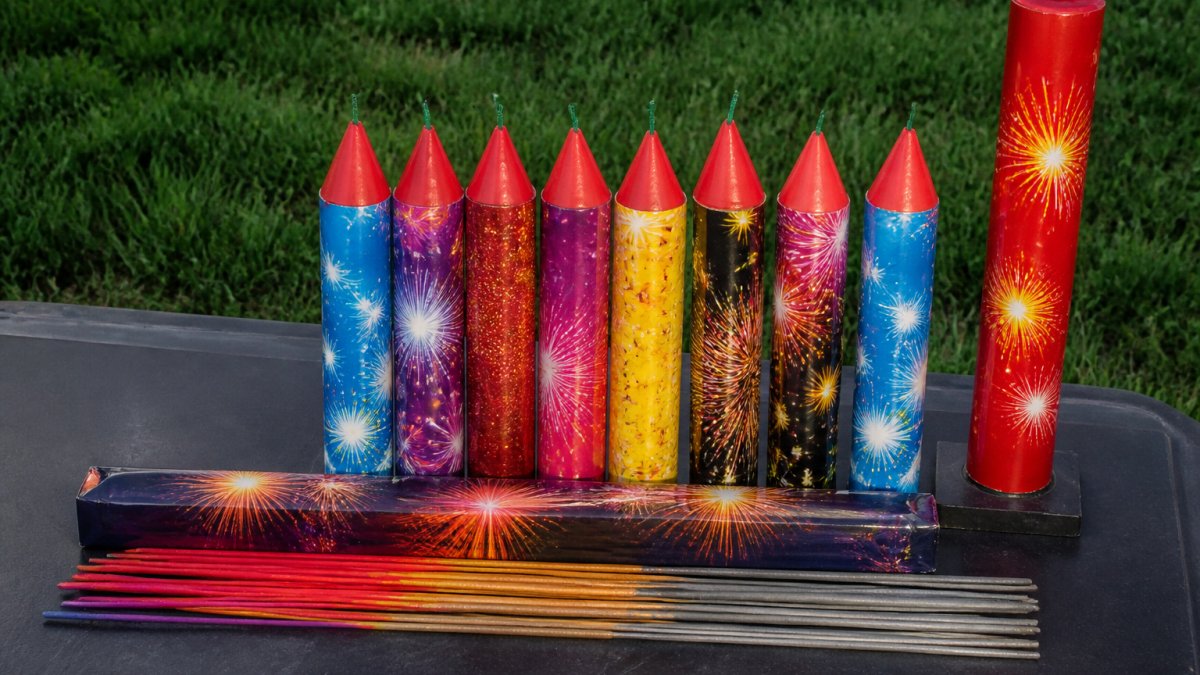
A typical multi-shot cake burns 30-60 seconds; artillery shells fire in bursts of 5-15 seconds; candles provide sustained light for 20-40 seconds. For a 10-minute show, plan roughly 10-12 major product sequences, 10-12 cases of mixed products, so you don't run out mid-show.
Build a cue sheet, not a guess
A cue sheet is a simple two-column list: cue number and product. Write it before you order. A beginner-friendly structure:
Cue 1-2 (open): Two artillery shell sequences for impact and to pull the audience's attention to the sky.
Cue 3-6 (build): Multi-shot cakes, one every 45-60 seconds, to establish rhythm.
Cue 7-9 (variety): Candles and smaller cakes to fill transitions and give the audience a visual change of pace.
Cue 10-12 (close): Your most impressive remaining shells and cakes fired in a tighter cadence for the finale.
Product selection drives pacing: artillery shells create dramatic peaks, multi-shot cakes provide sustained bursts, and candles fill transitions. This template scales up or down without redesigning the whole show.
Match the plan to the venue before you order
Venue size is the constraint most beginners underestimate. Before finalizing your cue sheet, walk the venue and mark three zones: the launch area, the fallout zone (where debris lands), and the spectator line. If they don't fit, shrink the show plan, not your safety margin.
Best Fireworks Stores' wholesale cases let you order these categories in the quantities your show actually needs, a 10-minute show in an open field differs from a 12-minute show in a compact park.
Pro Tip Write your cue sheet first, then convert it into a shopping list by product category. This prevents the most common beginner mistake: ordering a case of something impressive that doesn't fit anywhere in the show.
Watch Out Running out of inventory mid-show is a common disaster. Order 15-20% more product than your timeline requires. This buffer covers duds, timing adjustments, and audience requests for extended finale sequences.
Fireworks Show Duration Planning and Product Selection
Show duration depends on three factors: your audience's attention span, your venue's safety requirements, and your product inventory.
To plan duration, work backwards from your product mix: multi-shot cakes burn 30-60 seconds, artillery shells fire in bursts of 5-15 seconds, and candles provide sustained light for 20-40 seconds.
For a 10-minute show, plan approximately 10-12 major product sequences, 10-12 cases of mixed products, so you don't run out mid-show.
Product selection directly affects pacing. Artillery shells create dramatic peaks, multi-shot cakes provide sustained bursts, and candles fill transitions.
Fireworks Safety Guidelines for Public Events
Safety protocols separate successful community events from dangerous ones. Public displays require precautions backyard shows don't.
First, establish a clear safety perimeter.
Second, designate a single point of ignition. One person controls when products fire. This prevents accidental simultaneous ignition and ensures timing aligns with your choreography.
Third, inspect all products before the show for damage, moisture, or defects, a cracked shell or wet fuse can misfire.
Fourth, have fire suppression equipment on-site. A fire extinguisher and water source should be immediately accessible to your ignition operator.
Fifth, brief your team on emergency procedures, misfires, unexpected ignition, or audience encroachment. A simple pre-event meeting covering these scenarios prevents panic.
Shipping, Delivery Logistics, and Timing
Ordering bulk fireworks for community events requires understanding shipping timelines. Fireworks are classified hazardous materials, which affects how they ship and how long delivery takes.
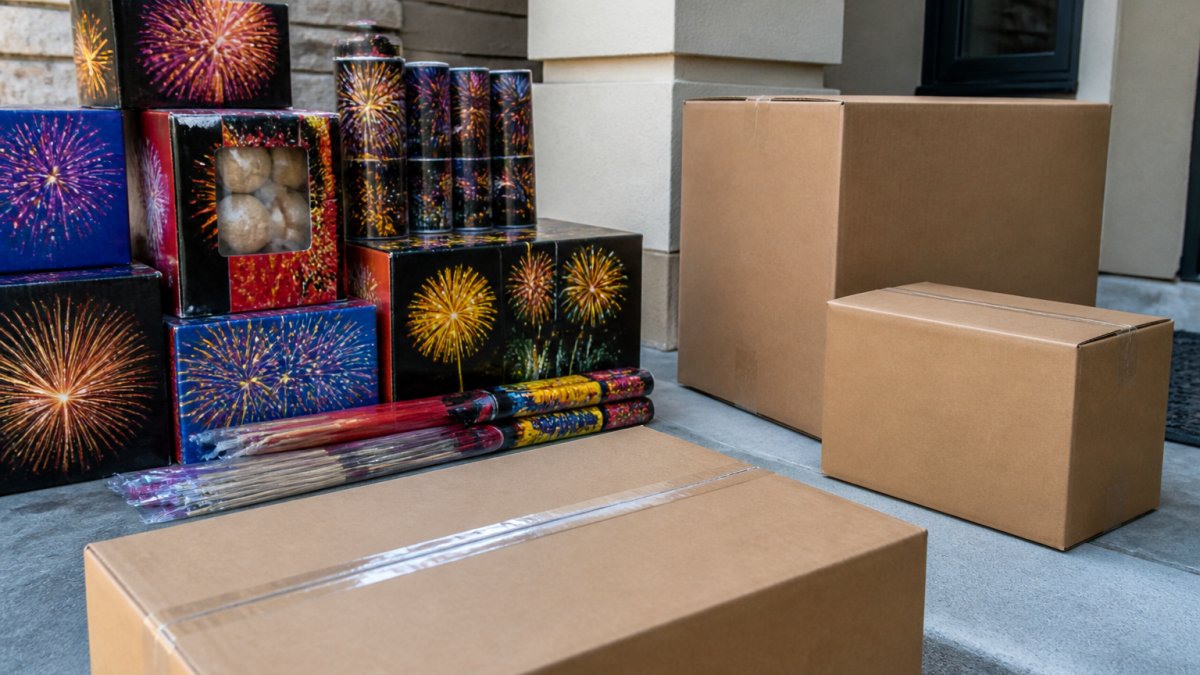
Fireworks can't ship via standard parcel carriers, they require specialized hazmat shipping through licensed carriers. Delivery typically takes 7-14 business days.
Best Fireworks Stores handles hazmat logistics, but delivery windows are typically 2-3 days wide, not exact times.
Delivery location matters. Fireworks must be signed for by an adult, and the address needs to be accessible during business hours.
Storage before your event matters.
Freight delivery is available for very large orders. If you're ordering multiple pallets of wholesale cases, freight may be more cost-effective than parcel shipping.
Permits, Legal Requirements, and Insurance for Community Displays
Public fireworks displays require permits and compliance with local regulations. Skipping permits creates legal liability and risks a shutdown. Permitting and insurance most often derail a community event in the final two weeks.
Step 1: Identify the right authority (it isn't always the fire marshal)
Start by contacting your local fire marshal's office, which oversees display permits in most jurisdictions. In some areas the permit runs through the city or county clerk, the parks department (for public land), or a combination of agencies. A quick call tells you which office issues the display permit and which issues the land-use or special-event permit, often two separate applications.
Step 2: Work backward from a 30-60 day application window
Most jurisdictions require a permit application 30-60 days before your event. Build your calendar backward:
Event date minus 60 days: Call the fire marshal and confirm which permits apply, what the application requires, and whether the venue needs its own approval.
Event date minus 45 days: Submit the display permit application and the special-event or land-use application.
Event date minus 30 days: Confirm insurance coverage is bound and request a certificate of insurance naming the venue and the jurisdiction as additional insureds if required.
Event date minus 14 days: Confirm permit approval in writing and re-confirm the delivery window with your supplier.
Event date minus 7 days: Walk the venue with your ignition operator and confirm the safety perimeter, fallout zone, and spectator line.
Submitting early gives you time to address concerns. A rejected or incomplete application at the 14-day mark is very difficult to recover from.
Step 3: Assemble the document packet
The application typically asks for:
Event date, start time, and rain date
Event location and a site diagram showing the launch area, fallout zone, and spectator line
Product types and quantities (your cue sheet doubles as this)
A written safety plan, including the ignition operator's name
Insurance information, including the certificate of insurance
The name and contact information of the responsible party for the event
Keep copies of your permit, insurance certificate, and fire marshal approval available during your event, documentation proves you followed proper procedures.
Step 4: Understand what insurance actually covers
Insurance is often required, many venues require proof of liability insurance covering fireworks displays. The two things organizers most often get wrong:
General liability vs. special-event liability. A standard business general liability policy frequently excludes fireworks. You usually need a special-event or event-specific liability policy, or an endorsement that names the fireworks display as a covered activity. Confirm this in writing with your agent, a verbal 'you're covered' is not enough.
Additional insured status. Many venues and jurisdictions require that they be named as additional insureds on your certificate. This is a routine request, but it takes time to process, so ask your agent early.
Insurance costs vary by event size, attendance, and location, so budget for it. Contact your agent early to confirm coverage and requirements. If your event is a nonprofit or municipal function, ask whether existing coverage can be extended.
Step 5: Confirm which products are legal in your jurisdiction
Local regulations dictate which product types are legal for your display, some areas restrict aerial shells or specific categories. Your fire marshal can clarify what's permitted, and Best Fireworks Stores can help you select compliant products once you know the rules. Bring your cue sheet to that conversation; a specific list is easier to approve.
Step 6: Plan for cleanup and environmental requirements
Community events are increasingly under pressure to leave public spaces clean. Two steps:
Debris sweep. Organize a volunteer sweep of the fallout zone the morning after the event. Fireworks debris is largely paper, cardboard, and clay, but it must be collected before the venue opens.
Check local burn bans and drought restrictions. In dry conditions, jurisdictions may impose burn bans or require additional fire suppression on-site. Confirm current restrictions the week of your event, conditions change.
Key Takeaway Treat permitting and insurance as a 60-day project, not a 2-week task. The organizers who run into trouble are almost always the ones who started the paperwork after the product arrived.
Pro Tip Ask your fire marshal whether a pre-event site inspection is required. Some jurisdictions inspect the launch area and storage location before approving the permit, and scheduling that inspection takes time.
Frequently Asked Questions
Where can I buy bulk fireworks for a community event?
Online retailers specializing in bulk fireworks for community events ship cases nationwide with warehouse pickup options available in many states. When ordering bulk fireworks for community events, verify your state's shipping restrictions before checkout, as some states limit delivery of consumer fireworks. Compare inventory selection, delivery timelines, and case pricing across retailers, then confirm your event location is eligible for delivery.
What's the difference between bulk and retail fireworks purchases?
Bulk purchases involve ordering case packs of multiple items at discounted per-unit rates, while retail means buying individual items at full price from local stores. Bulk ordering for community events offers significant savings on artillery shells, multi-shot cakes, and candles when you need volume. Wholesale cases arrive ready for event distribution, whereas retail requires multiple shopping trips and higher total spend.
How far in advance should I order bulk fireworks for a community event?
Order bulk fireworks at least 2-4 weeks before your community event to secure inventory and allow time for shipping logistics. Peak seasons like Fourth of July and New Year's Eve see higher demand and longer delivery windows. Ordering early also gives you time to plan your show choreography, arrange permits, and coordinate with local fire marshal approval if required.
What legal requirements apply to fireworks shows at community events?
Community fireworks displays require a public display permit from your local fire department and compliance with state and federal hazard class regulations for consumer fireworks. You may also need liability insurance for the event. Requirements vary by state and locality, so contact your fire marshal's office early to confirm permit timelines, safety protocols, and any restrictions on aerial shells or multi-shot cakes at your venue.
fireworks for sale

Comments