Bottle Rockets vs Roman Candles: Key Differences
Table of Contents
What Is a Bottle Rocket?
What Is a Roman Candle?
Key Differences Between Bottle Rockets and Roman Candles
How Bottle Rockets Work: Launch Mechanics and Flight Path
Roman Candle Effects Explained: Burst Charges and Multi-Shot Sequences
Firework Safety Tips for Aerial Displays
Consumer Fireworks Regulations and Legal Status
Choosing the Right Option for Your Celebration
Frequently Asked Questions
Last Updated: September 25, 2026
What Is a Bottle Rocket?
A bottle rocket is a small aerial firework designed to launch from a bottle or tube and explode in the sky. It consists of a cardboard tube filled with pyrotechnic composition, a fuse for ignition, and a stabilizing stick that keeps it on course during flight.
Bottle rockets are among the most popular consumer fireworks for backyard celebrations. They're affordable, easy to light, and produce bright bursts of color at moderate altitudes. The stabilizing stick acts like a rudder, guiding the projectile upward and preventing erratic flight paths.
The basic design has remained consistent for decades. You insert the rocket into a bottle (or launch tube), light the fuse, and it shoots skyward before the burst charge ignites, creating a bright flash or colored effect. Most bottle rockets reach heights between 100 and 300 feet before detonating.
What Is a Roman Candle?
A roman candle is a ground-based firework that shoots multiple glowing projectiles into the air in rapid succession. Unlike bottle rockets, roman candles don't fly through the air themselves, they stay on the ground and fire effects upward.
Roman candles contain several individual charges stacked inside a cardboard tube. Each charge ignites in sequence, launching a burst of sparks, stars, or colored balls into the sky. This multi-shot sequence creates an extended display lasting 10 to 30 seconds depending on the candle's size.
The key difference from bottle rockets: roman candles produce a continuous show from one stationary position. They're held or placed upright on the ground, and the effects come to you rather than traveling through the air. This makes them ideal for creating dramatic aerial displays without launching projectiles across your yard.
Key Differences Between Bottle Rockets and Roman Candles
Bottle rockets vs roman candles differ in several fundamental ways that affect how you use them and what kind of display they create.
Flight vs. Stationary Display Bottle rockets are projectiles that launch from a tube and travel through the air before exploding. Roman candles remain on the ground and shoot effects upward. This single distinction shapes everything else about how each firework performs.
Launch Mechanism Bottle rockets use a stabilizing stick to control their trajectory during flight. The stick keeps the rocket pointed upward and prevents spinning. Roman candles have no flight mechanism, they're simply lit and held or positioned upright.
Duration and Effect Pattern A bottle rocket typically produces one bright burst lasting 1-2 seconds at its peak altitude. Roman candles fire multiple charges in rapid succession, creating a sustained show of 10-30 seconds with repeated bursts, sparkles, or colored projectiles.
Safety Considerations Bottle rockets require clear airspace and present a fire hazard if they land on structures or vegetation. Roman candles demand a firm grip or stable placement and can project effects in unpredictable directions if not held steady.
Visual Impact Bottle rockets create isolated points of light scattered across the sky at various altitudes. Roman candles produce concentrated bursts of color and sparkle from a single location, building a more theatrical effect over time.
Feature | Bottle Rockets | Roman Candles |
Flight type | Aerial projectile | Ground-based stationary |
Duration | 1-2 seconds | 10-30 seconds |
Shot count | Single burst | Multiple shots |
Altitude reached | 100-300 feet | Varies by projectile |
Stabilization | Stick-guided | Held or positioned upright |
Best for | Scattered sky effects | Concentrated displays |
How Bottle Rockets Work: Launch Mechanics and Flight Path
Bottle rockets operate through a simple but effective sequence of ignition and combustion. When you light the fuse, it burns down to the main pyrotechnic composition inside the tube, creating expanding gases that force the rocket upward.
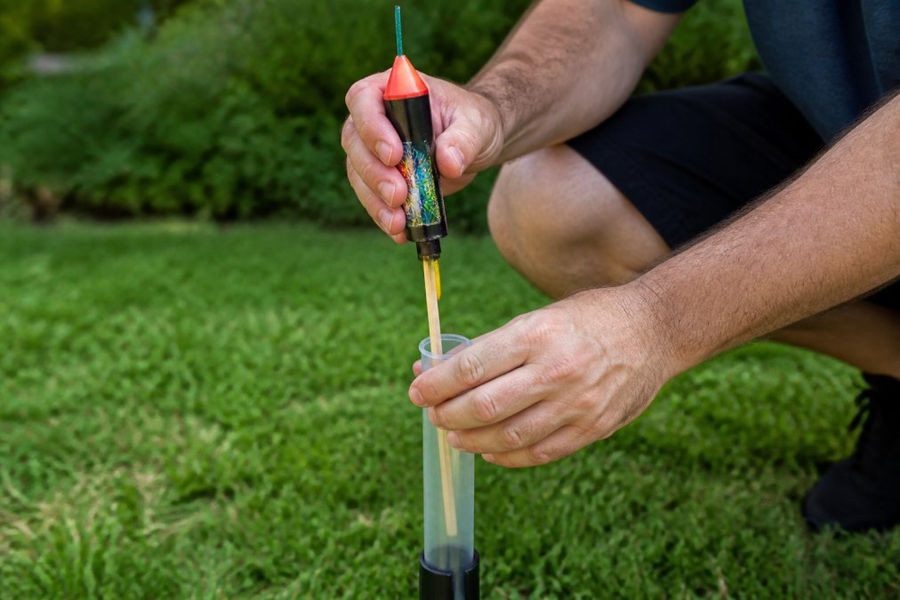
The stabilizing stick is critical to flight performance. It acts as a rudder, keeping the rocket oriented nose-up during ascent. Without it, the rocket would tumble and spin, losing altitude and producing an erratic trajectory. The stick's weight and length are engineered to provide just enough drag for stable flight without slowing the rocket significantly.
Flight Path Mechanics The rocket accelerates upward rapidly for the first 2-3 seconds. As it climbs, air resistance increases and the thrust from the propellant decreases. At peak altitude, the rocket's velocity drops to near zero, and the burst charge ignites, creating the bright flash or colored effect you see.
Most bottle rockets reach their peak between 100 and 300 feet, depending on the tube diameter, propellant quantity, and stick design.
Ignition Sequence The fuse burns at a controlled rate, typically 3-5 seconds before reaching the main charge. This delay gives you time to move away from the launch tube. Once the burst charge ignites, the pyrotechnic composition inside explodes, creating the visible effect, sparks, color, or bright white light depending on the chemical composition.
Roman Candle Effects Explained: Burst Charges and Multi-Shot Sequences
Roman candles create their distinctive display through a series of timed charges that fire in rapid succession. Each charge launches a projectile or burst of sparks into the air, with delays between shots that create a rhythmic, theatrical effect.
Multi-Shot Sequence A typical roman candle contains 5-20 individual charges stacked vertically inside the tube. A slow-burning fuse ignites the first charge, which launches upward. As that projectile rises, the next charge ignites automatically, sending the second burst skyward before the first has even peaked.
This overlapping sequence creates the signature roman candle effect: a continuous stream of color and light that builds and intensifies over 10-30 seconds. The viewer's eye tracks each burst as it rises, creating a sense of motion and energy.
Burst Charge Design Each charge contains a specific pyrotechnic composition, typically stars (small pellets of metal and chemical compounds) mixed with a binder. When ignited, these stars produce sparks, colored light, or glowing balls depending on their chemical makeup.
Red stars produce red effects. The combination and ratio of chemicals determine the final visual appearance of each shot.
Timing and Control The delay between shots is controlled by the fuse burn rate and charge spacing inside the tube. Faster-burning fuses create rapid-fire effects. Slower burns allow more time between bursts, creating a more measured, dramatic display. This timing is engineered during manufacturing and cannot be adjusted once the candle is made.
Firework Safety Tips for Aerial Displays
Safety is non-negotiable when handling bottle rockets, roman candles, or any consumer fireworks. A few essential precautions prevent injuries and property damage.
Clear Your Launch Area Remove people, pets, and obstacles from your firing zone. Bottle rockets can drift sideways if the stabilizing stick isn't perfectly balanced. Roman candles can project effects in unexpected directions if held at an angle. Maintain at least 50 feet of clear space around your launch point.
Wear Eye and Hand Protection Wear safety glasses rated for impact protection. Use a gloved hand to hold roman candles. Keep your face turned away from the launch tube when lighting bottle rockets. Fragments from failed fuses or tubes can cause eye injuries.
Never Point at People or Structures Even a small misfire can cause burns or eye damage. Never aim bottle rockets toward buildings, vehicles, or spectators. Hold roman candles upright and pointed skyward, never tilted toward people.
Light One at a Time Never light multiple fireworks simultaneously. Use a long-handled lighter or extended fuse to maintain distance from the ignition point. Wait at least 10 seconds after lighting one firework before lighting the next.
Check Weather Conditions High winds can push bottle rockets off course or cause roman candles to spray effects sideways. Avoid launching on windy days. Dry conditions increase fire risk, check for nearby dry grass or leaves that could catch sparks.
Have Water Nearby Keep a bucket of water or a fire extinguisher within arm's reach. Never leave lit fireworks unattended. If a firework misfires or doesn't ignite, wait 30 seconds before approaching it.
Store Properly Keep fireworks in a cool, dry location away from heat sources. Store them in original packaging until ready to use.
Consumer Fireworks Regulations and Legal Status
Consumer fireworks are regulated at both federal and state levels in the United States. Legal status varies significantly by state, and some states prohibit certain types of fireworks entirely.
Choosing the Right Option for Your Celebration
Deciding between bottle rockets vs roman candles depends on your venue, audience, and the type of display you want to create.
Frequently Asked Questions
What is the main difference between a bottle rocket and a roman candle?
Bottle rockets are projectiles that launch into the air using a combustion-driven flight path, producing spark effects as they ascend and descend. Roman candles are ground-based pyrotechnic devices that remain stationary and shoot multiple burst charges upward in sequence. Bottle rockets rely on trajectory and altitude for their visual effect, while roman candles create effects through timed ignition of individual projectiles fired from a launch tube.
Are bottle rockets or roman candles safer for backyard use?
Roman candles are generally considered safer for backyard use because they remain stationary and fire effects upward in a predictable pattern. Bottle rockets present greater risk due to their unpredictable flight path, which can be affected by wind, and their potential to land in unintended areas or on structures. Regardless of type, both require proper safety distance, adult supervision, and adherence to local regulations. Always read manufacturer instructions and follow all firework safety precautions.
What safety precautions should I take when using aerial fireworks?
Maintain a minimum safety distance of 50 feet from spectators and structures. Never aim or direct bottle rockets toward people, animals, or property. Use a stable launch tube for bottle rockets to ensure proper trajectory. Light fuses with a long-reach lighter or extended fuse, then move to a safe distance immediately. Keep water or a fire extinguisher nearby. Never attempt to relight a firework that fails to ignite. Wear eye protection and avoid bending over lit fireworks. Use these fireworks only in open areas away from dry vegetation or flammable materials.
Are there legal restrictions on bottle rockets and roman candles?
Yes. Federal regulations classify consumer fireworks under specific guidelines, and many states restrict or prohibit bottle rockets entirely. Roman candles are legal in most states but subject to local ordinances. Some municipalities prohibit all aerial fireworks. Before purchasing, verify your local and state regulations, as restrictions vary significantly by location. Best Fireworks Stores can help you determine eligibility for delivery to your address based on current regulations in your area.
Get Started Today

Comments